
You were not touched. Not a scratch. But you keep seeing it, you flinch at intersections, and you have not slept properly since.
People in this position often assume there is nothing to claim because they were not physically hurt. That is not what California law says. You may be able to recover for PTSD from witnessing an accident, though the rules are strict and they depend heavily on where you were and who was hurt.
Yes. Psychological injuries are recognized, and PTSD is a diagnosable condition with recognized symptoms, treatment, and costs.
What makes these claims harder is not whether the harm is real. It is that courts have deliberately limited who may sue for witnessing harm to another person, to keep liability from extending to everyone who saw something awful.
It depends which situation you are in, and most people fall into one of three.
You were also involved in the crash. If you were injured yourself, emotional harm is part of your own claim. You do not need any special bystander rule. PTSD, anxiety, and sleep problems are compensable as pain and suffering alongside your physical injuries.
You were in danger but not hurt. If the negligence put you at risk directly, you may be able to pursue emotional distress as a direct victim rather than as a bystander.
You watched someone else get hurt. This is the classic bystander claim, and it has three requirements.
California’s rule comes from Thing v. La Chusa, a 1989 California Supreme Court decision. A person may recover for emotional distress from observing the negligently inflicted injury of another only if all three of these are true:
All three must be met. This is a bright line rather than a balancing test.
Because it decides most of these cases, and the result can feel harsh.
In Thing itself, a mother was nearby when her son was struck by a car. She did not see or hear it happen. She was told, ran to the scene, and found him lying injured in the road. The court held she could not bring a bystander claim because she was not present and contemporaneously aware of the event as it occurred.
Two practical notes follow from that. Perceiving the event can count even without seeing it, since hearing a collision as it happens can satisfy awareness. And watching something unfold on a screen from somewhere else generally does not count as being present.
Then a bystander claim is usually unavailable, however severe your reaction. Witnessing a stranger’s injury, or a coworker’s or a friend’s, typically does not meet the close relationship requirement.
That does not necessarily leave you with nothing. If you were in the zone of danger yourself, or if the at-fault party owed you a duty directly, another theory may fit. It is worth having the facts reviewed rather than assuming.
Saying you were shaken is not enough. These claims are built on documentation:
Get evaluated and keep going. A gap in treatment is the first thing an insurer points to, and untreated distress is very hard to value later.
A short daily note helps more than people expect. Writing down what triggered a reaction, how you slept, and what you avoided that day turns a vague account into a record with dates attached. Juries and adjusters respond to specifics, and memory fades faster than symptoms do.
Where a claim is viable, recoverable losses can include therapy and psychiatric care, medication, lost income and reduced earning ability, and the emotional suffering itself. Severe cases can also involve long-term treatment, which is why these claims are often undervalued when settled early. Our catastrophic injury team sees this frequently in crashes with life-altering outcomes.
Timing applies here too. Most California injury claims carry a two-year deadline, and psychological injuries are no exception. If witnessing the event cost you a family member, a wrongful death claim may run alongside it.
If a provider has questioned whether your symptoms came from the event, our article on what to do when a doctor says your injuries are not related may help.
What you saw does not leave simply because your body was spared. Insurers treat psychological harm as soft and negotiable, and a claim built without medical documentation tends to prove them right.
At DP Injury Attorneys, we look closely at where you were, what you perceived, and who was hurt, because those facts decide which claim is available to you. Our San Diego car accident lawyers will give you an honest read rather than a hopeful one.
Contact us for a free consultation. There is no fee unless we win your case.
If what you witnessed is weighing on you right now, please consider reaching out to a mental health professional or your doctor for support.
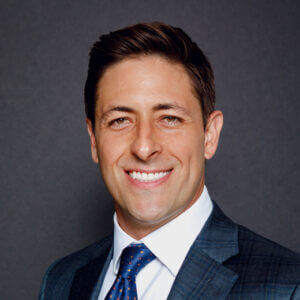
Arthur Paul D’Egidio is the Managing Partner of DP Injury Attorneys, a San Diego personal injury law firm. With more than 12 years of experience in California injury law, he has dedicated his practice to representing clients in a wide range of personal injury matters, including car accidents, workers’ compensation, slip and falls, catastrophic injury, and wrongful death cases.
Arthur received his Juris Doctor from the Thomas Jefferson School of Law and is a member of the State Bar of California as well as the San Diego County Bar Association. He has received numerous accolades for his work, including being named a Super Lawyer for seven straight years by Thomson Reuters and a “Top 40 Under 40” by the National Trial Lawyers.

