
Medical bills come with numbers on them. Lost wages show up on a pay stub. But how do you put a figure on not sleeping through the night, or on giving up the hobby that used to be the best part of your week?
That is the puzzle at the center of most injury claims. Learning how to prove pain and suffering matters, because in serious cases this part of the claim is often worth more than the bills. It is also the part insurance companies fight hardest, precisely because there is no receipt to point at.
The phrase is a shorthand. California law calls these non-economic damages, and the recognized categories are broader than most people expect.
Under the state’s civil jury instructions, they include:
You do not have to pick one label. A single injury can support several of these at once, which is part of why careful documentation pays off. Visible scarring, for example, carries its own weight, as we cover in our article on compensation for scarring and disfigurement.
You prove it with specifics. Vague statements about hurting do very little. Concrete, verifiable detail does a lot. The strongest cases are built from:
Here is the shift that helps most: stop describing the pain and start describing what the pain stopped. A jury feels a father who cannot lift his daughter far more than a plaintiff who says the pain is a seven out of ten.
This surprises people. There is no formula in California law. The jury instruction says plainly that no fixed standard exists for deciding these damages, and that jurors must use their judgment and common sense based on the evidence.
That cuts both ways. There is no cap built into a chart, so a well-documented claim can be valued generously. There is also no automatic number, so an undocumented claim can come back disappointingly low. The evidence you gather while you are still hurting is what fills that gap.
You have probably seen these described online as if they were law. They are not.
These are negotiating conventions used by adjusters and lawyers to talk about ranges. No California statute requires either one, and no jury is instructed to use them. They can be a useful starting point in settlement talks, but treat any website promising a precise number from a formula with real skepticism.
For most injury claims, no. California does not impose a limit on non-economic damages in a standard case such as a car crash, a fall, or a premises claim. If a jury concludes a figure fairly compensates you, that is the figure.
The notable exception is medical malpractice. In those cases, non-economic damages are limited by a statutory cap under Civil Code Section 3333.2, and the ceiling increases on a set schedule over a period of years. If your claim involves a healthcare provider’s negligence, ask a lawyer which limit applies to the year your case is filed, because the answer changes.
Outside of that exception, the practical ceiling is whatever the evidence supports. That is worth remembering when an adjuster implies your suffering has a standard value. It does not.
Knowing the pitfalls is half the work:
Sharing fault does not eliminate this part of your claim either. It reduces recovery proportionally, which we explain further in our piece on being partially at fault for an accident.
Yes, when it is properly supported. California requires that future harm be reasonably certain rather than merely possible. In practice that means medical opinion testimony about lasting impairment, expected treatment, or a permanent condition.
For someone facing a lifelong injury, this is often the largest component of the entire claim. It is also the piece most commonly left on the table when a case settles early, before anyone has established what the years ahead will look like. Severe cases like these are the heart of our work in catastrophic injury claims.
Your suffering is real whether or not a document captures it. The trouble is that insurance companies pay for what you can prove, not for what you went through quietly.
At DP Injury Attorneys, we help clients build that record from the start. We know how to present a life that changed, not just a stack of bills, and we do not accept an adjuster’s opinion that your experience is worth little. Our San Diego car accident lawyers will review your case honestly and tell you what it takes to document what this has cost you.
Contact us online for a free consultation. There is no fee unless we win your case.
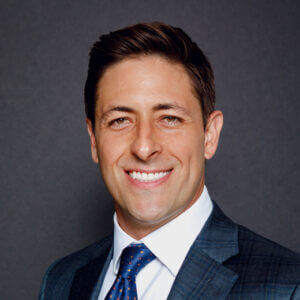
Arthur Paul D’Egidio is the Managing Partner of DP Injury Attorneys, a San Diego personal injury law firm. With more than 12 years of experience in California injury law, he has dedicated his practice to representing clients in a wide range of personal injury matters, including car accidents, workers’ compensation, slip and falls, catastrophic injury, and wrongful death cases.
Arthur received his Juris Doctor from the Thomas Jefferson School of Law and is a member of the State Bar of California as well as the San Diego County Bar Association. He has received numerous accolades for his work, including being named a Super Lawyer for seven straight years by Thomson Reuters and a “Top 40 Under 40” by the National Trial Lawyers.

