If someone else’s carelessness took a person you love, California law lets your family recover:
Their estate can also bring a separate claim for medical bills and lost pay from before they died. If the person responsible acted with real malice, like a repeat drunk driver, that claim can include punitive damages.
One thing you should know before reading anything else online. As of January 1, 2026, California no longer lets most estates recover for a loved one’s pain and suffering before death. A lot of law firm websites still say otherwise. They’re out of date.
It isn’t their salary. It’s what they would have actually contributed to the family after covering their own expenses, over the years they likely would have kept working. That total then gets adjusted to today’s dollars.
Then comes the part insurance companies love to skip: household services.
If your spouse handled childcare, school pickups, cooking, and every repair around the house, that’s work. It costs real money to replace. Same goes for an adult son who drove his mom to dialysis three times a week, or a grandmother who watched the kids so both parents could work. California lets you recover what it now costs to pay someone else to do those things.
If nobody puts a number on it, the adjuster certainly won’t.
California juries are told to consider the loss of love, companionship, comfort, care, assistance, protection, affection, society, and moral support. For a child, that includes the loss of a parent’s training and guidance. It’s all laid out in the jury instruction courts use, CACI No. 3921.
There’s no formula. The jury decides what’s fair based on the relationship.
That’s why “he was a great dad” isn’t enough. What wins these cases is proof. Photos. Texts. The coach who can talk about him never missing a game. The coworker he called every morning. The small, specific details that show a jury who this person really was to you.
California doesn’t pay for grief or sorrow on their own. It pays for what the relationship gave you. In practice, that covers most of what families mean when they talk about what they lost.
From 2022 through 2025, a temporary law called SB 447 let an estate recover for the pain and suffering a person went through before they died. It expired on January 1, 2026. A bill to extend it died in the Legislature.
So under the current version of Code of Civil Procedure section 377.34, a survival claim filed today is mostly limited to medical bills, lost earnings before death, and property damage. Cases filed before the end of 2025 kept the old rule.
There’s one big exception. If your parent or grandparent died after abuse or neglect in a nursing home or care facility, California’s elder abuse law can still allow recovery for their pain and suffering. Make sure that question gets asked.
Code of Civil Procedure section 377.60 puts these people first in line:
If none of them survived, the right goes to whoever would inherit under Probate Code section 6402. That’s usually parents first, then brothers and sisters.
People who depended on the person financially can also file, even if they aren’t first in line. That includes stepchildren and parents. A minor who lived in the home for the past 180 days and got at least half their support from the person can file too.
The questions we hear most:
Can I sue for my brother’s death? Usually only if he left no spouse, domestic partner, kids, grandkids, or living parents.
Can we sue after our adult daughter died? Yes, if she had no spouse or children, or if you relied on her financially.
We were together 15 years but never married. Can I file? Unless you registered as domestic partners, California generally says no. It’s a brutal rule, and it’s one reason to talk to a lawyer before assuming anything.
All family members with a claim have to be part of one lawsuit. The money is then divided among them.
They’ve done this thousands of times. You’re doing it once. Here’s what to expect:
None of this is personal to them. It’s just how they protect their bottom line. You need someone protecting yours.
Not through the family’s wrongful death claim. California courts have been clear on that, no matter how bad the conduct.
Punitive damages can come through the estate’s survival claim under Civil Code section 3294. You have to prove malice, oppression, or fraud. A driver with three prior DUIs who got behind the wheel drunk again. A company that knew its product was killing people and kept selling it.
For most cases, no. Car crashes, truck accidents, dangerous property, defective products: no cap.
Medical malpractice is the exception. Under Civil Code section 3333.2, the emotional loss side of a malpractice death case is capped at $650,000 in 2026. It rises $50,000 each year until it hits $1 million. Financial losses aren’t capped.
And if your loved one didn’t carry car insurance, that usually won’t hurt your family’s claim. The California Supreme Court ruled in Horwich v. Superior Court (1999) that the law limiting uninsured drivers’ damages doesn’t apply to wrongful death claims by their survivors.
There isn’t one worth quoting. A case for a retired 80-year-old and a case for a 35-year-old mother of three won’t look anything alike.
What actually moves the number: their age and earnings, who depended on them, how clear the fault is, and how much insurance is out there. That last one is huge. California’s minimum auto policy is only $30,000. A serious case means digging for every other source, like the at-fault driver’s employer, a commercial or umbrella policy, a property owner, a manufacturer, or your own underinsured motorist coverage.
You can see results our firm has reached on our case results page. Every case is different, and past results don’t guarantee future outcomes.
That six-month deadline is the one that sinks San Diego families. An MTS bus, a city truck, a dangerous intersection the city ignored, a Caltrans road hazard. If a public agency played any part, the clock is already running.
And don’t wait on a criminal case. It runs on its own track. Your deadline doesn’t stop for it.
Insurance companies have a legal team whose whole job is paying your family as little as possible. Quite frankly, that makes us angry. At DP Injury Attorneys, partners Arthur D’Egidio and Irving Pedroza have spent their careers pushing back.
Whether you lost someone in a car crash, a truck accident, or something else entirely, we’ll sit down with you, learn who they were, and fight for every dollar the law allows. Learn more about our San Diego wrongful death attorneys.
Your consultation is free. You pay nothing unless we win. Hablamos español.
Call us or contact us online today.
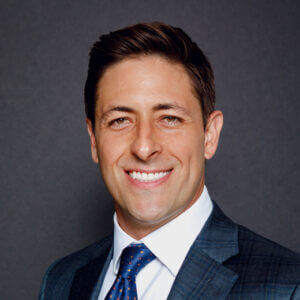
Arthur Paul D’Egidio is the Managing Partner of DP Injury Attorneys, a San Diego personal injury law firm. With more than 12 years of experience in California injury law, he has dedicated his practice to representing clients in a wide range of personal injury matters, including car accidents, workers’ compensation, slip and falls, catastrophic injury, and wrongful death cases.
Arthur received his Juris Doctor from the Thomas Jefferson School of Law and is a member of the State Bar of California as well as the San Diego County Bar Association. He has received numerous accolades for his work, including being named a Super Lawyer for seven straight years by Thomson Reuters and a “Top 40 Under 40” by the National Trial Lawyers.

